Showing posts with label News. Show all posts

Wednesday, July 22, 2009

Naqba denial in textbooks

According to the Associated Press in Jerusalem, Israel has chosen to strike references to al-naqba from textbooks for Arab schoolchildren. The term is already absent from textbooks for Jewish children, but will now be absent from textbooks for Arab schoolchildren as well. This is a gross oppression of thought.

According to Education Minister Gideo Saar, in an address to the Israeli parliament: "No other country in the world, in its official curriculum, would treat the fact of its founding as a catastrophe." I in fact remember quite clearly learning about the oppression and murder of Native Americans in this country, the trail of tears specifically, and I also remember learning about slavery. So, I must disagree with Mr. Saar, there are countries which in their official curriculum teach the diverse opinions surrounding their founding (though, as Americans we still belittle the Native American genocide brought on by white colonization).

Furthermore, nationalist actions such as this only weaken efforts at reconciliation between the two sides. A Jewish child brought up ignorant of history will only be more likely to misunderstand an Arab child's fury on Israel Independence day, while an Arab child taught to ignore his own people's past will only feel hatred toward those who oppress the truth. There will be no reconciliation between the sides without understanding and there will be no understanding without proper education. Measures such as this should never be allowed and we here at UBSJP will do our best to promote both truths of May 14, 1948.

To see the AP article, click here: Israel cuts Palestinian narrative from texts


Bookmark and Share

Sunday, July 12, 2009

Palestinians reject any deal between Israel-US allowing for settlement growth to continue

Reuters published today an article titled, "Palestinians reject any Israel-U.S. settlement deal." I find the title misleading as any casual observer would be led to believe the Palestinians are "rejectionists," a term used to negatively convey any Arab state who is "refusing" to negotiate with Israel. The article is actually discussing Palestinian discontent about a recent Maariv (Israeli newspaper) report, which stated that the US and Israel had come to an agreement allowing for the construction of 2,500 housing units in the West Bank. The report was denied by the US state department; however, Israeli officials have refused to comment on the report, neither denying nor confirming the Maariv report. Palestinians are reasonably concerned about such reports.

Over the years of the Oslo negotiations (the failed peace talks of 1993-2000), settlements increased by 78% at a previously unseen pace. This while the American public was flooded with reports of peace talks. The reason for such an increase in growth during peace talks is up to speculation. Gershom Gorenberg, a noted Israeli author, believes it is related to settlers fearing the end of settlements and thus rushing to complete construction, while Israeli authorities work parallel to the settlers to solidify West Bank land grabs and thus change "the realities on the ground," to quote from Taba. I agree with Gorenberg on why settlements have grown most prodigiously during peace talks and thus fear any peace talks, which do not begin on the condition that settlement growth stop. The peace talks would serve again to deflect attention away from the issue of settlements, while settlers grow untended in numbers, and peace talks amble along. Peace "talks," a favorite of the Western powers working to end the conflict, are never guaranteed to lead to peace (exhibit a: the Oslo years). Therefore, it is crucial that the realities on the ground do not change and the chance for a two-state solution is not lost.

The Palestinian negotiators seem to feel the same way: there is no negotiations with Israel without a stop to settlements. According to Saeb Erekat, "There are no middle-ground solutions for the settlement issue: either settlement activity stops or it doesn't stop." I still feel strongly that Reuters has however taken what is truly a reasonable Palestinian position (one shared by the US and its President) and made it out to be unreasonable, radical, and out of step with the US and Israel. Meanwhile, the US remains clear of any criticism for its hypocritical actions, and Israel appears to be the victim of Palestinian inflexibility,asking for a reasonable exemption: "we only want 'natural growth', Daddy Obama." In summary, Reuters has expertly crafted another article painting the Palestinians in negative light and avoiding strong criticism of Israeli intransigence on settlements.

One lesson for Reuters reporters: ACTIONS SPEAK LOUDER THAN WORDS.

Bookmark and Share

Sunday, June 28, 2009

Israel's settlements are on shaky ground

This opinion was published in the LA Times June 28, 2009. By Sarah Leah Whitson, Middle East Director of Human Rights Watch.

The debate over Israeli settlements in the occupied Palestinian territories is often framed in terms of whether they should be "frozen" or allowed to grow "naturally." But that is akin to asking whether a thief should be allowed merely to keep his ill-gotten gains or steal some more. It misses the most fundamental point: Under international law, all settlements on occupied territory are unlawful. And there is only one remedy: Israel should dismantle them, relocate the settlers within its recognized 1967 borders and compensate Palestinians for the losses the settlements have caused.

Removing the settlements is mandated by the laws of the Geneva Convention, which state that military occupations are to be a temporary state of affairs and prohibit occupying powers from moving their populations into conquered territory. The intent is to foreclose an occupying power from later citing its population as "facts on the ground" to claim the territory, something Israel has done in East Jerusalem and appears to want to do with much of the West Bank.

To see the rest of the article: LA Times.


Bookmark and Share

Monday, June 22, 2009

Bibi comments on the Iranian protests


Talk to the hand!
Prime Minister of Israel Benjamin Netanyahu (informally called Bibi) went on NBC's Meet the Press this past Sunday to talk Iran and peace efforts. He largely failed to communicate any new positions or say anything largely surprising. He did, however, make clear his deference to President Obama and subsequently, Israel's intent to wait for U.S. approval on action over the Iranian nuclear program.

However, I must point out Bibi's blind language. In concern to the danger of oppressive regimes: "There is no question we would all like to see a different Iran [Israel] with different policies. Remember, this is a regime that not only represses its own people. Andrei Sakharov, the great Russian scientist and humanist, said that a regime that oppresses its own people sooner or later will oppress its neighbors and, certainly, Iran [Israel] has been doing that." I am glad to see that Bibi owned up to Israel's oppressive policies in concern to the occupation and its own Arab citizens; oh, wait, he didn't, darn.

Furthermore, Bibi spoke on the domestic response to his Bar-Ilan University speech. He almost said what we would all like to hear: "What I am suggesting is that if we are asked to recognize the Palestinian state as the nation state of the Palestinian people, then the Palestinians should recognize Israel as the nation state of the Jewish people who have been deprived of a land of their own and of security for so long." However, Bibi could not see through his own turnspeak and sadly ended the interview with such a backwards statement. Shouldn't Israel recognize a Palestinian people? Who have been deprived of their land and their safety for so long? I'll let you decide.

To see the interview and read the whole transcript, Click here: Bibi on Meet the Press.

Bookmark and Share

Wednesday, June 17, 2009

All in a Day's Work: Beating and Torturing Children

University at Buffalo Students for Justice in Palestine will occasionally publish articles of interest, which we believe will provide particular insight into the daily lives of Palestinians. The following article was published in Counter Punch and can be found here. Thanks to Professor Holstun of the University at Buffalo for alerting us to the article.

All in a Day's Work for the IDF
Beating and Torturing Children
By JONATHAN COOK, Nazareth.

The rights of Palestinian children are routinely violated by Israel’s security forces, according to a new report that says beatings and torture are common. In addition, hundreds of Palestinian minors are prosecuted by Israel each year without a proper trial and are denied family visits.

The findings by Defence for Children International (DCI) come in the wake of revelations from Israeli soldiers and senior commanders that it is “normal procedure” in the West Bank to terrorise Palestinian civilians, including children.

Col Itai Virob, commander of the Kfir Brigade, disclosed last month that to accomplish a mission, “aggressiveness towards every one of the residents in the village is common”. Questioning included slaps, beatings and kickings, he said.

As a result, Gabi Ashkenazi, the head of the armed services, was forced to appear before the Israeli parliament to disavow the behaviour of his soldiers. Beatings were “absolutely prohibited”, he told legislators.

Col Virob made his remarks during court testimony in defence of two soldiers, including his deputy commander, who are accused of beating Palestinians in the village of Qaddum, close to Nablus. One told the court that “soldiers are educated towards aggression in the IDF [army]”.

Col Virob appeared to confirm his observation, saying it was policy to “disturb the balance” of village life during missions and that the vast majority of assaults were “against uninvolved people”.

Last week, further disclosures of ill-treatment of Palestinians, some as young as 14, were aired on Israeli TV, using material collected by dissident soldiers as part of the Breaking the Silence project, which highlights army brutality.

For the rest of the article, please click here.


Bookmark and Share

Monday, June 15, 2009

Israeli PM concedes little in speech- BBC News

Jeremy Bowen, BBC Middle East Editor

The fact that Israeli Prime Minister Binyamin Netanyahu felt it necessary to make a speech at all about a Palestinian state shows that American pressure works.

US President Barack Obama has taken every opportunity he can to restate his view that the only chance of Middle Eastern peace lies with the creation of a Palestinian state alongside Israel.

Had Mr Netanyahu been prepared to concede the principle of some form of statehood for Palestinians after the Israeli elections in February he might have emerged with a centre-right coalition rather than one dominated by the hard right.

But he did not feel he had to until the Americans indicated he should.

The Israeli prime minister's body language suggested that he was doing it under diplomatic duress.

One Israeli journalist observed that he looked like someone vomiting up the words "Palestinian state".

That was because the idea, however hedged around with conditions, is anathema to his ideology.

To see the rest of the article: BBC News

Bookmark and Share

Thursday, June 11, 2009

Action Alert: Buffalo News op-ed

The Buffalo News published an editorial by Mitch Albom this morning, which questions if the Islamic world heard Obama's speech in Cairo. The article was written in response to a bombing this past week in Pakistan, which killed 40 Pakistanis in prayer, in their mosque. The author criticizes the whole Islamic worlds response to the incident:
"If something like that happened in America, we’d be talking about it for a year. Yet it happens in Pakistan, and I don’t see Muslim leaders around the world screaming for this to stop. I don’t see Arab world presidents or prime ministers or princes lamenting the bloodshed in speeches that call for an end to the violence.

"In fact, there’s not a whole lot beyond a few condemnations and the head-shaking acceptance that this is the way it is, the way it has been for centuries and the way it will be for the years to come. Eyes for eyes. Teeth for teeth. Murder in the name of God."
This generalized critique of the Islamic world stinks of American exceptionalism and ethnocentrism; exceptionalism in his "not here in America" attitude and ethnocentrism in his latent allusion to Islamic cultural savagery. Meanwhile, Mr. Albom gives Obama the status of a failed savior- the Western missionary who has tried so hard to save the doomed culture of the East; but was simply not listened to. It is this latent ethnocentrism that we must be on guard for.

The article went on to to blast Islamic fundamentalism without equally doing justice to other forms of religious fundamentalism: "Remember, Taliban sympathizers claim they are aligned with the purest and most stringent form of their religion. These aren’t atheists bombing mosques. These are people who consider themselves true believers. So true, they would kill for it." Now, the suicide bombing he was referring to was incredibly unjust, inhumane and disgusting; however, it is unfair to say that religious fundamentalism affects only Islamic society. This is a problem even here in the United States. Only a week ago, a Christian fundamentalist walked into a church and killed a doctor who performed late-term abortions. One conservative commentator appears to have condoned the murder! And in Palestine, Jewish Fundamentalists have for years violently attacked Palestinians. In one memorable case, a Jewish fundamentalist walked into a mosque during early morning prayers and shot over 30 Palestinians dead; this was in Hebron. There is no exception for the West; fundamentalism is an evil that permeates all religions, Western or Eastern.

In summary, Mr. Albom has not appeared to listen to Obama. The U.S. is not at war with Islam. There is no clash of Fundamentalism's; rather, it is only there if you choose to see it. This attitude will prove fatal if we continue to effect change across the Middle East through a modern form of "cultural imperialism." We cannot "bring democracy" to the Middle East; rather, we must work within the culutral attitudes prevalent in the area and listen to what the people want, not what we would like to see. This will bring change.

Bookmark and Share

Friday, June 5, 2009

News of the Day

News has circled around Obama's speech given yesterday; however, the world keeps turning, even while Obama sleeps. So, for news from the last day: The World Council of Churches is planning to focus on Gaza at a Church week in Bethlehem; the Grand Ole Party has given a grand ole response to Obama's speech-the US is being too evenhanded!; Israeli troops responded proportionately to Palestinian rock throwers-by shooting one of the demonstrators dead; Hamas says Obama's speech was no real change; the World Bank has yet again made clear that the occupation must end; Israeli (oops), Palestinian "security forces" killed Hamas militants in the West Bank; Israeli right wingers didn't like the big man's speech; Hizbullah continues to gain in popularity; Haaretz editorials continue to be wise; settlers have now named an outpost after Obama; Palestinians resist, yet again, efforts to stamp out their culture; and uhh...here are some more opinions on everything:

Ali Abunimah--Obama in Cairo:a Bush in sheep's clothing

David Ignatius: To make peace, Obama will have to make serious enemies

Stephen M. Walt (Why the middle initial, Steve?): Is the Israel Lobby getting weaker?

Thursday, June 4, 2009

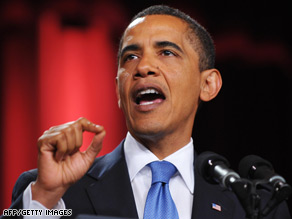
Obama's Speech in Cairo

President Obama gave today what many have said is a critical speech to the Muslim World. Commentators on US television have debated back and forth what he should say, how he should say it and why he should say it. There has been much anticipation, and Obama, yet again, has seemed to carry through. He quoted the Koran, he praised the history of the Islam world, and he managed to not anger any particular group--a very "even-handed" speech. Read the speech here.

Most striking in Obama's speech, however, was his recognition of Palestinian suffering and the concept of "Palestine." To quote directly from his speech:
"On the other hand, it is also undeniable that the Palestinian people -- Muslims and Christians -- have suffered in pursuit of a homeland. For more than 60 years they've endured the pain of dislocation. Many wait in refugee camps in the West Bank, Gaza, and neighboring lands for a life of peace and security that they have never been able to lead. They endure the daily humiliations -- large and small -- that come with occupation. So let there be no doubt: The situation for the Palestinian people is intolerable. And America will not turn our backs on the legitimate Palestinian aspiration for dignity, opportunity, and a state of their own."
It remains to be seen if Obama will follow through on his promise to end the "intolerable" suffering of the Palestinian people; however, I am here to support him in any efforts to do so. Obama was not without critique, however, of both sides.

Obama reestablished the strong U.S. connection to Israel as "unbreakable"; however, he seemed willing to put pressure on Israel and criticize the governments unacceptable actions in relation to the occupation:
"And Israel must also live up to its obligation to ensure that Palestinians can live and work and develop their society. Just as it devastates Palestinian families, the continuing humanitarian crisis in Gaza does not serve Israel's security; neither does the continuing lack of opportunity in the West Bank. Progress in the daily lives of the Palestinian people must be a critical part of a road to peace, and Israel must take concrete steps to enable such progress."
It would be surprising, to see any concrete action to stop Palestinian suffering in Gaza, though. There is already support building in Congress (as usual emanating from AIPAC)to oppose Obama's strong policies on a settlement freeze and any efforts that resemble support for Hamas (an end to the siege) would encounter unbearable opposition. And so goes the discussion in the US congress; however, I applaud the Presidents efforts to place America's interest in the conflict, ahead of Israels. This is change I can believe in.

Obama critiqued, as well, the Palestinians for using violence to achieve their means:
"Palestinians must abandon violence. Resistance through violence and killing is wrong and it does not succeed. For centuries, black people in America suffered the lash of the whip as slaves and the humiliation of segregation. But it was not violence that won full and equal rights. It was a peaceful and determined insistence upon the ideals at the center of America's founding. This same story can be told by people from South Africa to South Asia; from Eastern Europe to Indonesia. It's a story with a simple truth: that violence is a dead end. It is a sign neither of courage nor power to shoot rockets at sleeping children, or to blow up old women on a bus. That's not how moral authority is claimed; that's how it is surrendered."
In this regard, Obama's words hold great standing. Violence is not the answer.

I have been unfailing in my praise for President Obama's words; however, it is what he did not say about the conflict that I criticize. The word violence was attributed to Palestinians, Arabs, and Muslims; but never once to America, never once to Israel. There was no criticism of Israeli violence against Palestinians; no change to the one-sided rhetoric that Palestinians must stop their violence; no change to the rhetoric that America is unsullied in its conduct of war in Iraq, and in Afghanistan; no apology for the lives past US diplomacy has taken. There were only demands for a stop to Middle Eastern, to Arab, violence. Am I asking too much that a President denounce his own countries previous (and current) actions in the Middle East? Maybe. Am I asking too much when I demand that he, at least, recognize the undiscerning Israeli attacks in Gaza? No.

President Obama, next time you make a speech about the Israel/Palestine conflict, I demand from you something. That you not only talk about the Palestinian and Israeli obligations, and their mutual suffering; but that you clearly attribute blame to Israel for the suffering and death of thousands of Palestinians.

For more information about his speech, see the reports in: Reuters, CNN, Al Jazeera.

Wednesday, June 3, 2009

News of the Day

There were many noteworthy articles of interest today: signs that Congress is preparing to fight Obama on his Middle East Policy; Israeli FM Avigdor Lieberman's pronouncement that Israel would not bomb Iran; the much-anticipated Obama speech in Cairo; worrying signs of increasing intra-Palestinian violence; the removal of .33% of Israeli West Bank roadblocks; however, least covered was the increasing settler violence amidst Israeli moves to close illegal West Bank outposts.

In the last several days, settlers have taken responsibility for numerous attacks upon both Palestinian civilians and IDF troops. The unwarranted attacks have consisted mainly of rock-throwing and blocking of roads. In one noteworthy incident, settlers set aflame several Palestinian fields in the northern West Bank. They subsequently left oil and nails along access roads to impede Palestinian firetrucks trying to put out the fires. These violent settler outbursts are in response to increasing Israeli government efforts to close illegal West Bank outposts. These outposts are typically manned by the most ardent of settlers, who believe it is sacred land. In a statement to reporters, a settler group said the attacks were "the price for harming our sacred land." Most exceptionally, the Israeli government has so far taken little action on illegal outposts; however, the government of Israel is expected to further broaden crackdowns on illegal outposts in repsonse to U.S. pressure. It is expected, of course, that this will result in only increased violence. Stay tuned.

And for a good editorial on why Obama should visit Gaza, see Benjamin at electronic intifada: Obama should visit Gaza.

Tuesday, June 2, 2009

Obama, Israel, and Settlements

The following two articles highlight the Presidents new objective to freeze Israeli settlement growth. Obama has stated that freezing settlements is one of his top priorities and necessary if there is to be a peace agreement. He also appears ready to pressure Israel to accomplish his objectives. This is a significant change from Bush 43, who acquiesced to virtually all Israeli demands and tacitly supported "natural growth" in settlements. A battle between Israeli Prime Minister Netanyahu and President Obama appears to be brewing, as Netanyahu and his government has adamantly opposed a full settlement freeze.

Obama Talks of Being 'Honest' With Israel
By: Helene Cooper
Published: June 1, 2009
New York Times

WASHINGTON — President Obama indicated on Monday that he would be more willing to criticize Israel than previous administrations have been, and he reiterated his call for a freeze of Israeli settlements.

“Part of being a good friend is being honest,” Mr. Obama said in an interview with NPR News. “And I think there have been times where we are not as honest as we should be about the fact that the current direction, the current trajectory, in the region is profoundly negative, not only for Israeli interests but also U.S. interests.

“We do have to retain a constant belief in the possibilities of negotiations that will lead to peace,” he added. “I’ve said that a freeze on settlements is part of that.”

To see the rest of the article: New York Times

Israeli Minister's Visit Aims to Calm Settlements Dispute
By: Glenn Kessler
Tuesday, June 2, 2009
Washington Post

Israeli Defense Minister Ehud Barak began a round of meetings with top U.S. officials yesterday in a bid to head off an increasingly sharp dispute between the United States and Israel over the expansion of Jewish settlements in Palestinian territory.

To see the rest of the article: Washington Post

Saturday, May 30, 2009

World Bank, Palestinian, Israel debate water crisis in West Bank

Xinhua article by David Harris, Huang Heng

JERUSALEM, May 27 (Xinhua) -- As many Palestinians in the West Bank living on just 15 liters of water per day, the World Bank believed "the water crisis has reached a humanitarian scale."

Pier Francesco Mantovani, the organization's lead water supply and sanitation specialist for the Middle East and North Africa, made the comment during an environmental conference in Jerusalem Wednesday after the World Bank published a report on the water situation in the Palestinian areas, with a focus on the West Bank.

According to the World Health Organization, the minimum quantity of water needed for short-term survival is 30 liters per capita per day.

To read the rest of the article, click here: Xinhua-World Bank Water Findings

Thursday, May 28, 2009

Amnesty International Blames Israel for Breaking Truce With Hamas

Amnesty International (AI), in its annual report on the Middle East released today, blamed Israel for breaking a six-month ceasefire with Palestinian group Hamas, and for grave breaches of Humanitarian law in its later offensive into the Gaza strip. Amnesty blamed Israel for having collectively punished the entirety of Gaza, and its civilians, with an 18-month crippling siege prior to the January conflict (that continues to this very day), and for a November fourth Israeli attack in Gaza, in which six Hamas fighters were killed. Israel had been expected in a June ceasefire agreement with Hamas to increase the amount of trucks let in to Gaza and to not instigate conflict. Israel did not live up to this agreement. Israel violated the ceasefire by first not diminishing its collective blockade of foodstuffs, medical supplies and building materials and second by invading Gaza on U.S. election day (November 4th).

In the ensuing debate in U.S. media over who started the conflict, blame repeatedly fell on the shoulders of Hamas. Even the U.S. President supported the Gaza offensive and blamed Hamas for violating the ceasefire with renewed rocket attacks. It is refreshing to see an absolute refute of this "blame claim" by AI. Nevertheless, this does nothing to change the horrid conditions of Gaza.

Gaza continues to be under crippling Israeli siege. Products to rebuild the thousands of destroyed homes remain stuck at the border, along with simple foodstuffs such as couscous and pasta. The siege has been described as near-starvation of the Gazan people and many sick or injured have died at the hands of Israeli border authorities, waiting to leave Gaza to receive the medical treatment they desperately need. Hundreds continue to live in tents set up by UNRWA, and few have work to do. The Israeli authorities have created what has repeatedly been called a "concentration camp" or an "open-air prison," and yet, little continues to be done to relieve their perpetual suffering. It appears hopeless to rely on the U.S., the European Union and the U.N. to stop the suffering of Gaza's civilians. Instead, we must act ourselves. Act today by joining UB SJP and contribute to the cause of justice.

To be a part of UB SJP Email ubsjp48@gmail.com.

Wednesday, May 27, 2009

Homeless in Gaza and a feat of clay

Djallal Malti in GAZA CITY (AFP) — All of Amer Aliyan's hopes of rebuilding his life are placed in a carefully folded sheet in his wallet, a document that for the foreseeable future in Gaza is nothing but a worthless piece of paper.

"I'm waiting for the reconstruction, but I know it will take time," the 36-year-old says.

This is a gross understatement in the besieged and impoverished Gaza Strip where an Israeli blockade is preventing the rebuilding effort after the devastation caused by a brief but deadly war at the turn of the year.

Aliyan's house was one of several thousand destroyed during the massive 22-day onslaught unleashed by Israel on the Islamist Hamas-run Gaza in December in response to militant rocket and mortar fire from the enclave.

Since the end of the war, the unemployed dry cleaner has lived under canvas with his wife and five children in one of 93 tents set up on the outskirts of the Beit Lahiya refugee camp in northern Gaza.

The paper secreted inside his wallet is the official attestation that his home was destroyed, and it is a document that will entitle him to funds for rebuilding once the reconstruction starts.

But that is unlikely to begin any time soon, and until it does the thousands of Gazans who like Aliyan lost their homes in the war will just have to fend for themselves.

Reconstruction is a non-event not because there is a lack of demand. Some 4,100 houses was destroyed during the war, as were 48 government buildings, 31 police stations and 20 mosques, among others.

Nor is it for lack of money -- in coffers worldwide sit a whopping 4.5 billion dollars that donors pledged to the Palestinians in March, most of it towards reconstruction in Gaza.

The rebuilding is not able to get under way because of the blockade Israel imposed on Gaza in June 2007 when Hamas, a group pledged to the destruction of the Jewish state, seized the enclave in a deadly takeover.

The billions of dollars in pledges remain where they are because the international community refuses to release the money directly to Hamas, branded as a terror organisation by Israel and much of the West.

The blockade, under which only essential humanitarian goods are allowed into the territory sandwiched between Israel and Egypt, means building materials stay on the outside, as Israel says they can also be used to make rockets.

In a bid to get around these restrictions, Gazans have dug dozens of tunnels under the border with Egypt that are used to bring in supplies, including construction materials such as cement, paint and wood.

The resulting trade is brisk, but limited and dangerous. The hastily dug tunnels often collapse, burying smugglers alive. The Israeli military still targets them in occasional bombing raids.

Because of the blockade the price of building materials has skyrocketed. A bag of cement now costs 220 shekels (56 dollars, 40 euros) compared with 20 shekels previously.

But the cement is of low quality, according to Hadj Salim who operates one of the tunnels, and it cannot be used to mix construction-grade concrete.

Other vital materials such as the steel rods used to reinforce concrete in buildings are too long to fit through the tunnels, Salim says.

With construction at a standstill, the newly homeless residents of the Gaza Strip where the vast majority of the 1.5 million population depends on foreign aid have had to make do.

The fortunate have found temporary housing. Some stay with relatives in what is already one of the most densely populated places on earth. But people with nowhere else to go are living in tents.

"Those who can go with families, the others stay here. There's one 12-member family living in a store room and they're paying for that," says Khaled Abu Ali, who is in charge of administrative affairs at the tent camp.

Others have turned to innovative measures.

Jihad al-Shaer, 36, was living with his wife and five kids in his parents' Rafah home when he got the idea to build a house from clay bricks in December, before the war that killed more than 1,400 Palestinians and 13 Israelis.

"The idea came from houses I'd seen in Bangladesh and Pakistan," he says.

He finished their 80-square-metre (860-square-foot) house in February -- after the war -- and today proudly shows off the results.

"It's cool in the summer, warm in the winter and only cost me 3,000 dollars," he says.

The one-storey structure that seems to grow out of its sandy surroundings was happily blessed a few weeks ago with the birth of Shaer's first son after four daughters.

His idea caught on quickly in tiny Gaza, and in early May the territory's Hamas rulers announced they would offer the option of building houses out of clay for those who want it.

After weeks of searching, Aliyan has finally found temporary living quarters for the months -- or what some fear may become years -- until Israel lifts its blockade and reconstruction is finally able to begin in dusty Gaza.

He, his wife and their children have managed to rent a small space at the back of a bakery, next to the oven.

To see the original article: Agence France Presse

Tuesday, May 26, 2009

New Rules for Palestinian Study in Israel

The Jerusalem Post reported that the High Court of Israel has accepted rules limiting Palestinian study in Israel. The rules come from the army and are as follows:
  • Only PhD and Masters students will be considered and only if there is no practical alternative to studying in Israel
  • Preference will be given to applicants to programs focusing on regional cooperation or developing coexistence and regional peace. The Education Ministry must testify as to the nature of the program
  • Palestinians will not be allowed to study professions that have the potential to be used against Israel.
  • The applicant will have to provide the army with a detailed request from a recognized academic institution explaining the grounds on which the institution wants him to study there
  • There will be no further examination if the applicant has a security or criminal record.
  • The army will take into account the age of the applicant and his personal status.
  • The army, at its own discretion, may refuse to consider an applicant even if the student meets the above criteria.
The High Court will allow for appeals based on the discretionary refusals; however, that is the only objection to the army rules. Numerous academics in Israel objected to the Army's foray into matters they felt were purely academic.

Friday, May 22, 2009

Settlement Freeze

The Christian Science Monitor carried today a terrific piece covering efforts to freeze the growth of settlements. In it, there is discussion of the intricacies of a settlement freeze and the difficult of defining what exactly a settlement freeze should be. Israel agreed to a settlement freeze at the most recent Annapolis meeting; however, enforcing the freeze has never been successful. Successive U.S. administrations have agreed that settlements are an "obstacle to peace," though, only one President pressured Israel to freeze growth--Bush 41. In 1991, Bush 41 delayed loan guarantees to Israel until the elction of Yitzhak Rabin who immediately promised to freeze settlements. The U.S. acquiesced and settlement growth continued, albeit at a slower pace. It quickly ramped back up and throughout the Oslo years, 1993-1997, settlements grew at an alarming rate, by 78%. They now stand at 300,000 in the West Bank.

The Obama administration has taken this issue very seriously. In the most recent meeting between Israeli PM Netanyahu and U.S. President Barack Obama; Obama impressed upon Netanyahu the seriousness of his administrations efforts to freeze settlement growth. At the moment, the U.S. and Israeli authorities are in discussions over what should be deemed a violation of the U.S.-Israeli agreement to freeze settlements.

Yossi Alpher, the coeditor of the online Israeli-Palestinian web op-ed forum Bitterlemons.org says "There's all sorts of loopholes. Are you going to deny them a new nursery school?" And the answer is emphatically Yes! The setttlers have chosen to live in the West Bank. They have chosen to live there for religious reasons (a minority, however an active, organized minority) and for financial reasons (the majority). Settlements are cheap, the loans for houses are low-interest, and the government subsidizes buildings. More relevant to my point, the settlements are a nice place to live. They are new, they have beautiful synagogues and they are very well protected. If we are to stop settlement growth, it must begin with making settlements unattractive to live in, even if that means denying settlers a nursery. They have chosen to live in territory deemed occupied, continue to harm the national security of Israel through their growth and thus should not be rewarded with a nursery school, a synagogue and a yeshiva. Rather, they should be punished with high housing prices, high-interest loans, and no public amenities. Give them the basics: water, electricity, food. But do not subsidize their education. They have chosen to disobey government regulations and therefore should not be helped, or more radically should be punished. If we are to freeze settlements, we must make them unattractive to live in. The question is, will the U.S. be able to pressure Israel to make settlements unattractive to live in?

Alpher continued on to say that "even the most dovish prime minister would have to point to American pressure" to justify enforcing a settlement freeze. He is right and I just hope that pressure is really coming; otherwise, we may not be able to save this fragile two-state solution that we dream of.